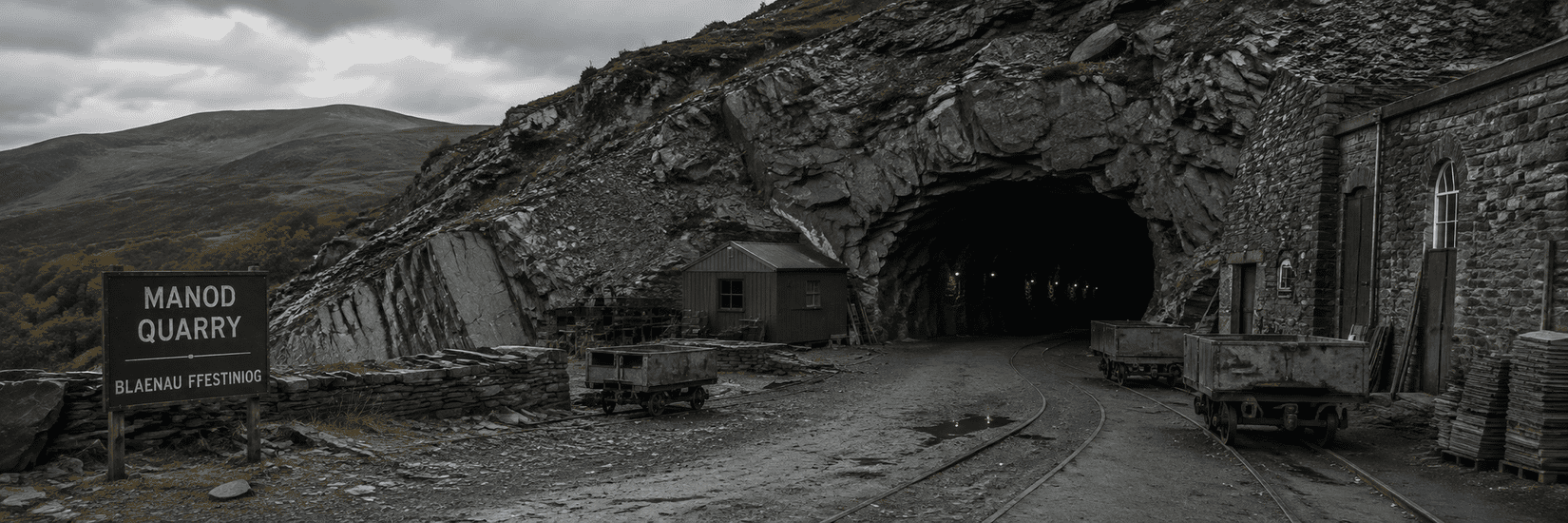
Manod Quarry
Note: Manod Quarry is a real slate quarry near Blaenau Ffestiniog in Gwynedd, North Wales.
Manod Quarry lies on the slopes above Blaenau Ffestiniog within the mountains of Eryri (Snowdonia). During the nineteenth and early twentieth centuries it formed part of the extensive slate industry that shaped the economy, landscape and communities of North Wales.
The quarry is best known for its vast underground chambers, created through decades of slate extraction. These enormous caverns, supported by substantial slate pillars, provide naturally stable conditions with little variation in temperature or humidity throughout the year.
During the Second World War, the British Government selected Manod Quarry as one of several secure locations for protecting works of national importance from enemy bombing. Between 1941 and 1945, hundreds of paintings from the National Gallery in London were transferred to specially prepared underground storage chambers within the quarry. The constant environmental conditions helped preserve the collection while London remained under threat.
The storage areas were carefully adapted for their temporary purpose. Ventilation, environmental monitoring and security measures were introduced to ensure that the paintings remained protected until they could safely be returned to the National Gallery after the war.
Although commercial slate extraction continued in parts of the quarry, Manod Quarry became widely recognised as an example of how Britain's industrial landscape contributed to the protection of its cultural heritage during wartime.
Today, the quarry remains an important part of the historic slate landscape surrounding Blaenau Ffestiniog, an area recognised as part of the UNESCO Slate Landscape of Northwest Wales World Heritage Site. The underground chambers continue to inspire historians, engineers, writers and visitors interested in the remarkable combination of industry, geology and wartime history found beneath the mountains of North Wales.