When the Record Says Otherwise
I have always been wary of the phrase, “I remember it clearly.”
That is not because I think people are dishonest. Quite the opposite is usually true. Most people who say those words are entirely sincere. They can see the room, remember the weather, hear a voice and perhaps even recall what they were thinking at the time.
Then a record appears and quietly disagrees with them.
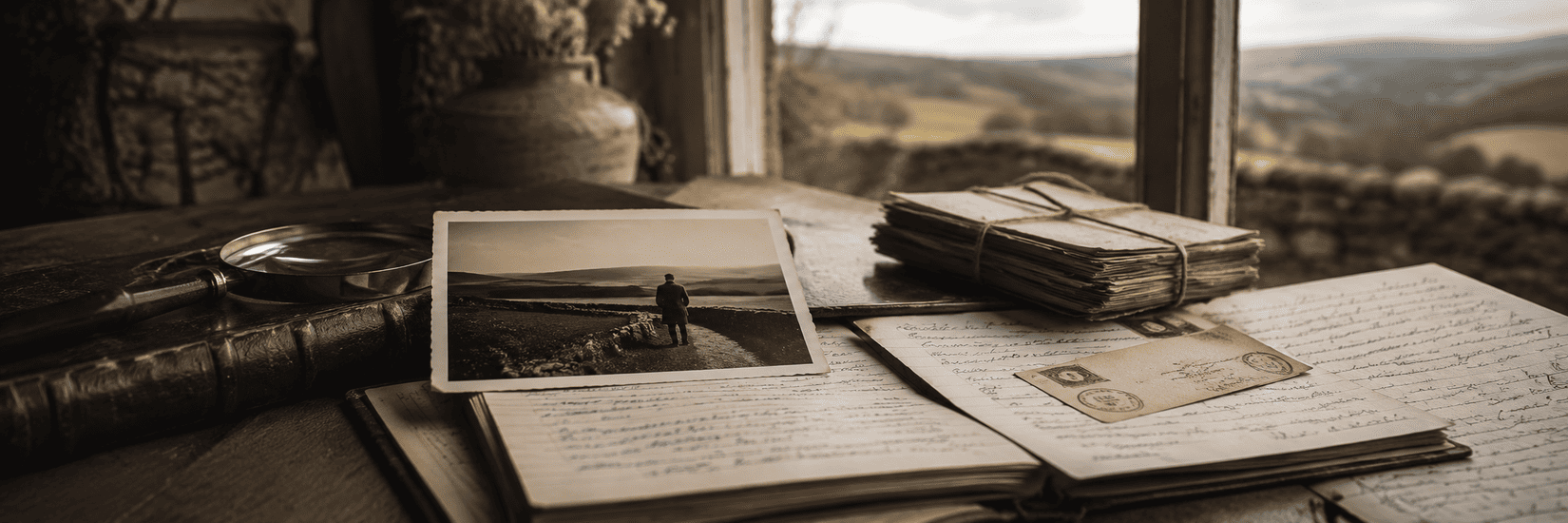
A letter carries a different date from the one everyone remembers. A photograph places somebody somewhere they insist they never visited. A diary describes an argument that, years later, both people involved remember as a pleasant evening. An official document establishes that something happened months earlier than the family story says it did.
Neither version necessarily contains a lie.
Memory is not a record that we retrieve unchanged. We carry memories with us, and during that time we revisit them, tell them to other people and listen to other versions of the same events. Years pass, and something that was once uncertain can gradually become definite. Something painful can become easier to remember, while a detail that seemed unimportant at the time can later become central to the story.
Written records have their own problems, of course. A diary can be written in anger, while a letter can conceal more than it reveals. An official form can contain an error, and a photograph can show only the fraction of a second during which the shutter was open. Even documents created at the time belong to people, and people misunderstand things.
That is why contradictions interest me.
When memory and evidence disagree, the natural temptation is to decide which one is correct. Sometimes that is possible, particularly when a dated document settles a simple question beyond reasonable doubt. At other times, however, the disagreement tells us something more interesting than the answer itself.
I once came across a family account of an event that had apparently happened during a particularly difficult year. Everyone who remembered the event placed it within those twelve months. The story had been repeated so often that the date had become part of it, and nobody seemed to have any reason to question it.
The surviving records showed that the event had actually happened two years later.
At first, the difference seemed like a simple mistake. Memory is imperfect, after all, and two years can easily disappear across several decades. What interested me was that several people had made essentially the same mistake, which suggested that something more than ordinary forgetfulness might have been involved.
That difficult year had become a marker in the family's memory. Other events had gradually gathered around it. Things that belonged to different months and different years had been drawn towards the same point until several separate experiences had become one period in the family story.
The record corrected the date, but the mistake helped to explain the memory.
I think that distinction matters because we often look to the past in search of certainty. We hope that enough documents, photographs and recollections will eventually produce one clean account of what happened. Unfortunately, the past rarely behaves so politely, and the surviving evidence often leaves us with several versions that refuse to fit neatly together.
Sometimes the most useful piece of evidence is precisely the one that refuses to fit.
A contradiction forces us to look again. It reminds us that confidence is not the same thing as accuracy, just as the existence of a document does not automatically make its contents true. More importantly, the disagreement can show us how people came to understand their own lives after the events themselves had passed.
That may be the lesson worth keeping from all of this. When a record contradicts a memory, we should resist the urge to discard one simply because the other appears more reliable. Instead, we should ask why the two versions are different and what that difference might tell us.
A document may establish what happened, while a memory may reveal what the event eventually came to mean to the people who experienced it. If we are fortunate enough to have both, the distance between them can sometimes preserve something about the past that neither one could have revealed on its own.