What We Leave Without Knowing
One of the quietest lessons I have learned is that the world rarely reveals its deepest truths in the moments that demand our attention. We are constantly encouraged to look towards what is urgent, dramatic and impossible to ignore, as though importance always arrives with a raised voice. Yet life has a curious way of proving the opposite. The things that shape us most profoundly are often so small and so ordinary that we fail to recognise their value until many years have passed.
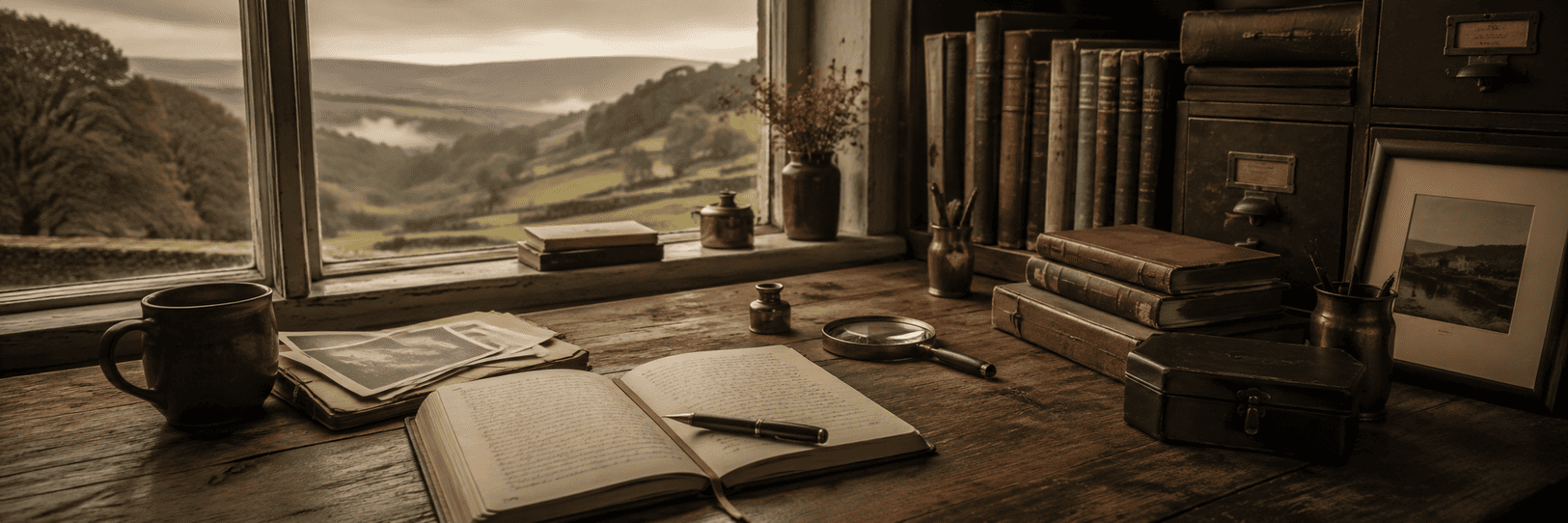
I have spent enough time among old papers, forgotten photographs and fading letters to know that memory does not preserve life according to the rules we expect. The official record may tell us when someone was born, where they lived or what occupation they followed, but it is the small and seemingly insignificant traces that allow us to glimpse the person behind those facts. A handwritten note tucked inside a book, a pressed flower between the pages of a diary or a photograph worn smooth from being carried in a pocket for decades often tells a richer story than any formal document ever could.
This has made me wonder whether we have become too eager to measure life by what can be counted. Modern technology records almost everything we do, and each passing year adds another layer to the growing archive of our existence. We leave behind photographs, messages, searches, purchases and countless digital footprints. Future generations may inherit more information about us than has ever been available for any generation before. Yet information alone has never been enough to understand a life. Facts explain events, but they rarely explain affection, regret, hope or love. Those things are found elsewhere, often hidden in the smallest details that were never intended to survive.
There is a quiet humility in recognising this. It reminds us that significance is not determined by scale. A single sentence written at the right moment can outlive an entire volume of official reports. An old photograph may become priceless not because of its quality but because it is the last remaining image of someone whose face would otherwise have been forgotten. These things matter because they carry human presence, and presence is something that no catalogue or database can ever fully describe.
Perhaps that is why I have come to believe that paying attention is one of the greatest acts of respect we can offer the world. When we notice the overlooked, we acknowledge that every life leaves traces worth preserving, however ordinary they may seem. We begin to understand that history is not only the story of famous names and celebrated achievements. It is also the story of countless quiet lives whose value was never measured by recognition, but by the love they gave, the memories they created and the marks they left upon the hearts of others.
If there is a thought worth carrying into today, it is simply this: do not overlook the ordinary. It is often there, in the smallest and most easily forgotten moments, that the truest story of a life quietly waits to be found.