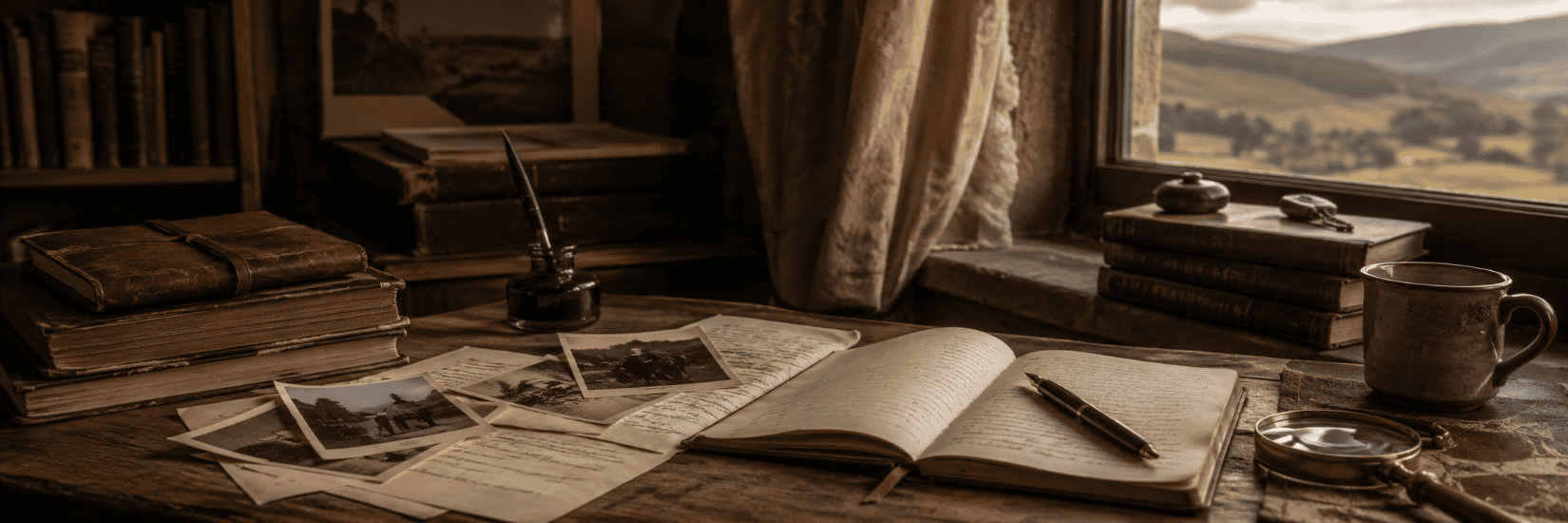
The Weight of Ordinary Things
There was a time when people believed that keeping a letter was enough.
They folded it carefully, slipped it back into its envelope and placed it inside a drawer that would remain unopened for years. The paper yellowed. The ink faded. The folds became softer every time it was read. None of that mattered. The letter survived because someone had decided it should.
The decisions we make now are quieter than that. Most pass unnoticed because they involve nothing more dramatic than pressing a button. Save. Delete. Archive. Share. We perform those actions without thinking, believing they concern information rather than memory. The distinction is not as clear as we like to imagine.
Every investigation eventually arrives at the same question. Not what happened. Not even who was responsible. The question becomes why one piece of evidence still exists while another has disappeared. Every surviving photograph, every forgotten email and every damaged hard drive has survived a series of choices made by ordinary people. Some deliberate. Some accidental. None of them understood what those choices might one day mean.
I have often found that the absence of something tells a clearer story than its presence. A missing page in a diary. A gap between photographs taken years apart. A folder that contains every document except the one you expected to find. People usually assume those gaps were created to hide the truth. Sometimes they were. More often they appeared because life moved on. A drawer was emptied. A computer failed. A relative decided that old papers were only clutter.
The result is the same.
History becomes uneven. It begins to favour what was convenient to keep instead of what deserved to be remembered.
That should make us cautious.
We place extraordinary faith in what survives. We speak of evidence as though it were complete, objective and untouched by chance. It rarely is. Every archive reflects thousands of forgotten decisions. Every family album is a collection of moments someone believed were worth preserving. Every digital account tells the story of what a machine managed to retain. None of them tell the whole story.
I have never believed that memory can be preserved perfectly. The past has a habit of slipping through our fingers no matter how carefully we hold it. What matters is recognising that what remains is only part of the picture. Certainty often grows strongest where the evidence is weakest.
Perhaps that is why I still pause before deleting even the smallest file.
Not because I imagine it contains some great secret. Most do not. It is because I have learned that importance is rarely visible at the moment something is created. The ordinary note. The blurred photograph. The brief message sent without much thought. They all seem insignificant until years have passed and they become the last surviving trace that someone was here.
Evidence has never been only about what we find.
It is also about what we choose to leave behind.