The Record and the Memory
Documents have a comforting habit of staying the same.
Once a letter is written, a photograph developed or a report filed away, it does not wake one morning and decide to tell a different story. Paper fades. Ink softens. Digital files become harder to open as software grows old. Even so, the record itself remains remarkably patient. It waits for someone willing to read it.
Memory is less obedient.
People often tell me they remember something exactly as it happened. I have learned not to argue. Most are telling the truth as they know it. They are describing what survived, not necessarily what occurred. The difference matters.
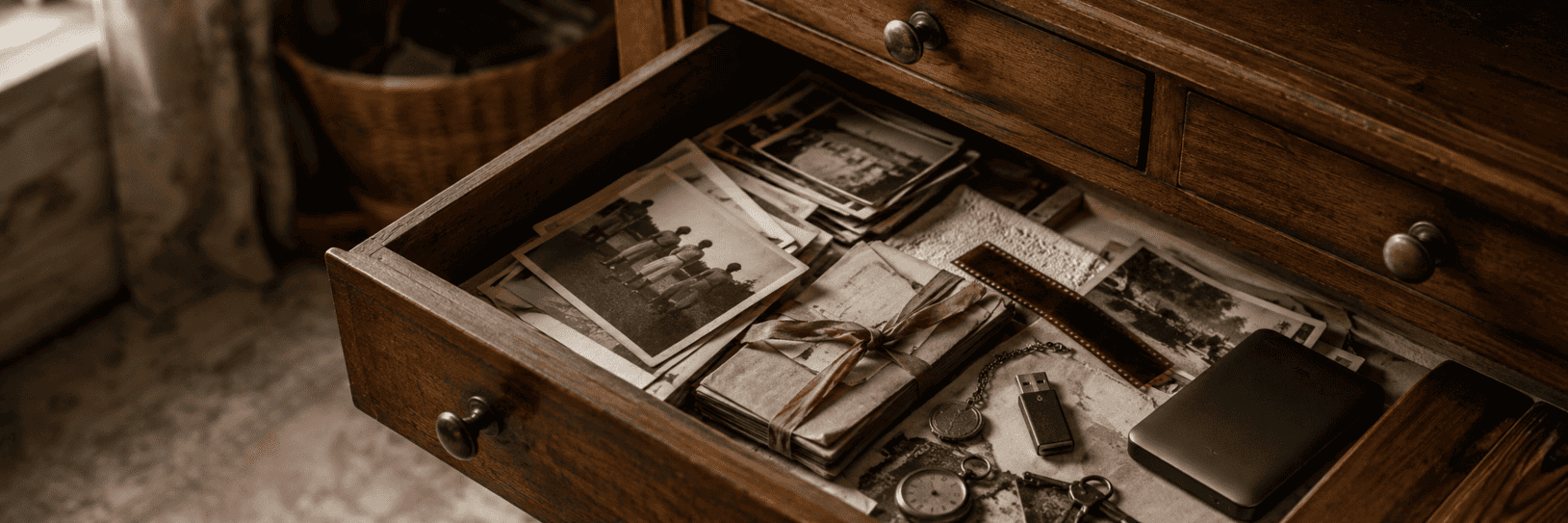
A few months ago I was looking through a small collection of family papers that had been kept in a biscuit tin for decades. There were birth certificates, a handful of receipts, two postcards and several black-and-white photographs. Nothing unusual. The sort of things that survive because nobody ever quite decides to throw them away.
One photograph showed a family standing outside a modest terraced house. Four adults. Three children. Everyone looking towards the camera except the youngest boy, who seemed distracted by something beyond the frame. The photograph recorded a single afternoon, nothing more.
When I asked about it, every member of the family who had seen the picture over the years remembered something different. One remembered the house because it had always seemed enormous. Another insisted it had been cold that day. Someone else remembered an argument that had happened just before the photograph was taken.
The youngest child, now in his seventies, remembered none of those things. What stayed with him was the smell of fresh bread from the bakery across the road.
The photograph settled none of those disagreements. It simply continued showing seven people standing outside a house. The record remained unchanged while memory carried on growing around it.
Technology has made that difference even more interesting.
We create records almost without thinking now. Emails replace letters. Phones quietly record where we travelled. Cloud storage remembers photographs we had forgotten taking. Computers preserve earlier drafts of documents we believed we had overwritten years ago.
It is tempting to believe that all this recording brings us closer to the truth. Sometimes it does. Sometimes it merely gives us more facts without any greater understanding.
I have opened archived email accounts belonging to people who are no longer alive. Thousands of messages survive. Appointments confirmed. Shopping lists exchanged. Birthdays remembered. Complaints about delayed trains. Questions about what to bring for Sunday lunch.
The record is astonishingly complete.
Yet after reading hundreds of messages I often know very little about the life itself. What mattered between those people was often expressed in the things they never needed to write down.
Memory carried that part.
I think that is why old notebooks have always interested me more than official files. An official document is written for someone else. A notebook is often written for the person holding the pen.
There is uncertainty in it. Crossed-out sentences. Half-finished thoughts. Questions that were never answered. Those pages rarely provide better facts than the formal record. They do something quieter.They show a mind trying to make sense of ordinary life.
Perhaps that is what memory has always been doing. Not preserving every detail. Simply deciding which details deserve to stay. As computers become better at preserving information, we may begin to mistake storage for remembrance. The two are not the same.
A hard drive can keep every photograph ever taken. It cannot tell us why one image was printed, framed and placed on a mantelpiece while a thousand others remained unseen inside a folder.
An archive can preserve every version of a document. It cannot explain why someone hesitated before pressing Save.
The record tells us what survived. Memory tells us what endured.
I suspect every family understands this, whether they realise it or not. There comes a time when nobody can quite remember the date, but everyone remembers the kindness. Nobody recalls the exact words, yet everyone remembers how they felt afterwards.
The paperwork becomes less complete as the years pass. The meaning often becomes clearer. That has always seemed a fair exchange. When I finish reading a file, I close the folder. The memory usually stays open.