The Lives Between the Records
We are often taught that history belongs to great events. We learn the dates of wars, the rise and fall of nations, the names of remarkable people and the moments that altered the course of the world. Those events deserve to be remembered, but I have never believed they tell the whole story. The history that shapes us most deeply is usually found somewhere quieter, hidden in places that few people think to look.
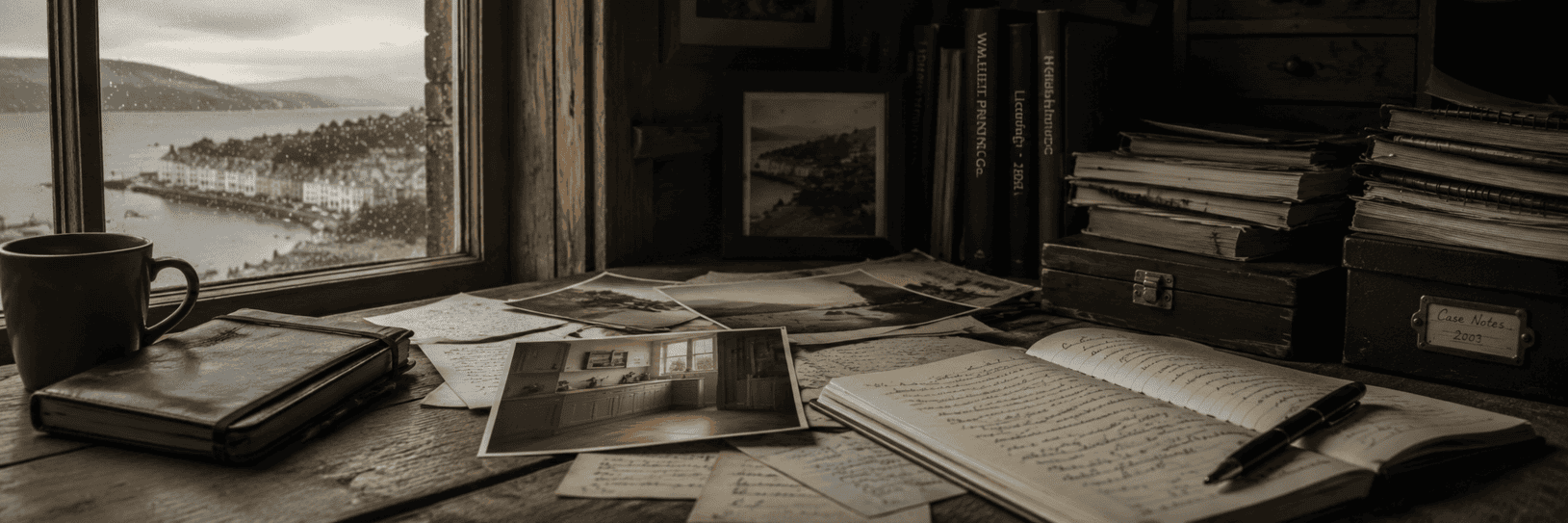
I have spent enough time among old records to know that the past rarely announces itself. Instead, it reveals itself through ordinary things that survived almost by accident. A photograph kept inside a favourite book, a letter folded so many times that the paper has become delicate, or a receipt tucked into the back of a drawer can say more about a person's life than any official record ever could. Those small discoveries remind me that the lives we leave behind are rarely measured by the moments the world considered important. They are measured by the moments that mattered to us.
Official records have their place. They tell us when someone was born, where they lived, what work they did and, eventually, when they died. They create the outline of a life with remarkable precision. What they cannot record is what made that life worth living. They cannot tell us who waited anxiously for a letter that never arrived, which piece of music reminded someone of home, or why a certain path through a village was chosen every evening without fail. Those details are rarely written down, yet they are often the ones that reveal who a person really was.
Perhaps that is why I have never thought of archives as collections of paper or photographs. I have always seen them as conversations waiting to begin again. Every document carries the quiet hope that someone, somewhere, will one day read it with enough patience to understand the person behind the words. Every photograph waits for someone willing to look beyond the faces and wonder what happened before the shutter clicked and after everyone walked away. Every object asks a simple question that cannot be answered by a catalogue entry alone. It asks who cared enough to keep it.
People are wonderfully difficult to reduce to facts. We remember emotions long after we have forgotten dates. We can recall the smell of an old house decades after we have forgotten its address. We lose names, yet we recognise a familiar voice within moments. We treasure things that appear worthless to everyone else because they remind us of someone we loved or a day we never wished to end. Memory has never worked according to logic, and perhaps that is one of its greatest strengths.
Modern life encourages us to believe that everything important can be stored, indexed and retrieved. Every year we create more photographs, more messages and more digital records than any generation before us could have imagined. We preserve almost everything, yet I sometimes wonder whether we understand any more than those who came before us. Information is abundant, but understanding still requires something that no machine can provide. It requires curiosity, patience and the willingness to see another human being as more than the sum of the facts that remain.
I have come to believe that the world does not hide its greatest stories. They surround us every day, quietly waiting inside the ordinary things that most people overlook. The challenge has never been finding evidence. The challenge has always been recognising the life that gave that evidence its meaning. When we learn to do that, we discover that every forgotten photograph, every faded letter and every worn possession has the power to remind us of something we should never forget. Every ordinary life mattered completely to the people who lived it, and that is reason enough for every one of those stories to be remembered.