Every Life Leaves a Record
People often believe history belongs to great events. Wars, elections and famous names fill the bookshelves and the television documentaries. Those things matter. They shape the world we inherit. They are not the whole story.
The quieter stories are often the ones that stay with me.
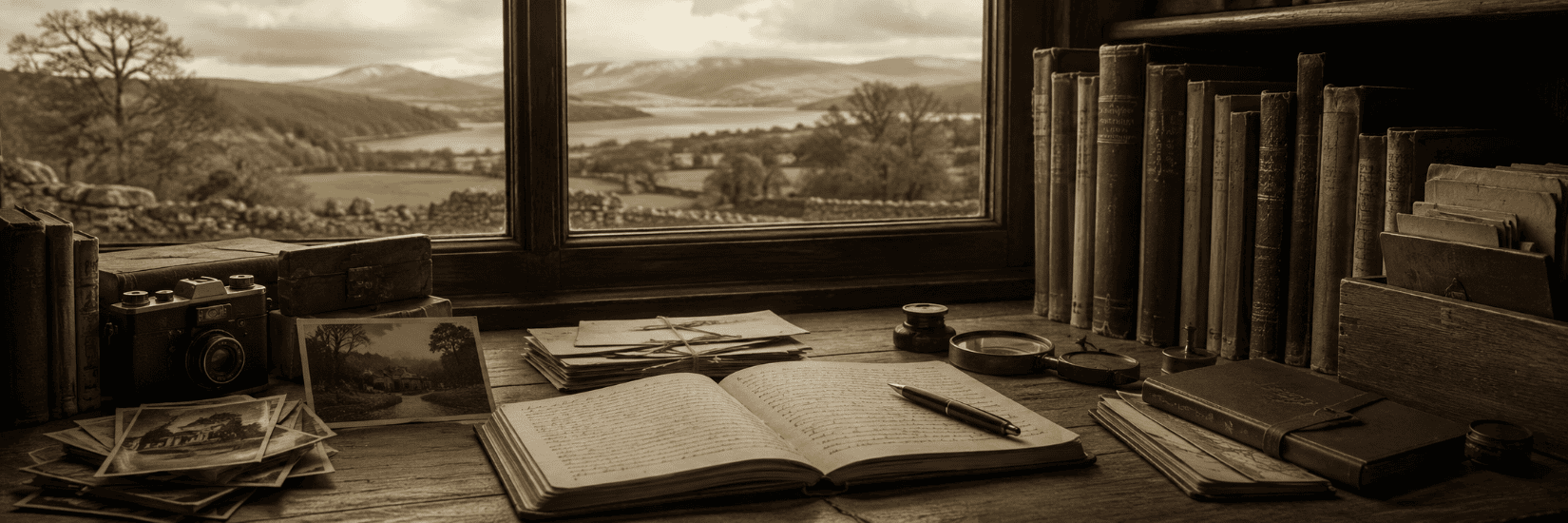
I have found them in faded photographs tucked inside second-hand books. I have found them in handwritten notes folded into old diaries. I have found them on ageing hard drives sitting in the back of a drawer, still holding thousands of moments that nobody had opened for years.
None of those things looked important at first.
Most of us spend our lives creating records without thinking about them. Every letter, every photograph, every email and every message becomes another small piece of who we were. At the time they seem ordinary. Years later they become evidence. Not simply of what happened, but of the person who lived through those moments.
Memory and records rarely tell exactly the same story.
Memory changes. It softens some details and sharpens others. Records are different. They preserve a moment without understanding it. A photograph can show where someone stood. It cannot explain why they smiled. A letter can record what was written. It cannot tell us what was left unsaid.
That difference has always interested me.
People sometimes ask whether I trust documents more than memory. I do not. Documents can mislead. Memories can fade. Neither is complete. The truth usually lies somewhere between the two, waiting for someone patient enough to compare them.
The questions have always mattered more than the answers.
Why was this photograph kept when so many others disappeared? Why was one letter folded so carefully? Why was a file renamed three times before someone stopped opening it? Small questions often lead to the largest discoveries because they ask us to look beyond the obvious.
Archives have never felt lifeless to me.
Every shelf, every box and every folder represents a decision. Someone chose to keep one thing and discard another. Those decisions tell us as much about a life as the objects themselves. They reveal what was valued, what was feared and what someone hoped would survive them.
That is why I have never believed people disappear all at once.
They leave traces in places they never expected. Some are written on paper. Some are stored on computers. Others remain in the memories of people who never realised they were carrying someone else's story.
Finding those traces is rarely the difficult part.
Recognising their importance is.
That thought stayed with me today. The smallest detail may seem ordinary now. One day it may become the piece of evidence that helps someone understand an entire life.